Bathroom Mold Keeps Coming Back? The Seattle Fix (2026)

Quick answer: Mold that returns after every scrub is not a cleaning problem — it’s a moisture problem, and in the Puget Sound it usually has one of two causes. Surface condensation (steam meeting cold walls with nowhere to go) is fixed with a properly sized exhaust fan ducted outside, run long enough after every shower. A moisture supply behind the surfaces (failed waterproofing, a slow leak, saturated drywall) can’t be cleaned away at all — the patch will return on schedule until the wall is opened and rebuilt. Below: the five-minute diagnosis that tells you which one you have, the fan setup that actually works in our climate, and the honest line between “clean it” and “remodel it.” Not sure which side you’re on? Send us three photos — the patch, the fan, the room — and we’ll tell you, free.
Why Seattle bathrooms grow mold on schedule
The physics is unglamorous: every shower releases warm, saturated air; that air touches the coldest surfaces in the room — exterior walls, ceiling corners, the window — and condenses back into water; and for roughly 9 damp months of the year in the Puget Sound — Seattle, Tacoma, and every suburb between them — those surfaces stay cold and the house stays closed. Without a working exhaust path, the room re-wets itself daily. Mold isn’t invading your bathroom; it’s accepting an invitation the room keeps sending.
The five-minute diagnosis: surface or supply?
Grab a flashlight and answer three questions. One — where is it? Ceiling, upper corners, around the fan grille, on paint: that pattern says airborne condensation — an exhaust problem. A recurring line along grout joints, the tub-to-wall seam, the baseboard, or a bubbling patch low on the wall says water is getting behind the surface — an exhaust fan can’t fix that. Two — does it come back in the same spot? Condensation mold moves around; supply mold returns to its address, because the source lives there. Three — how does it feel and smell? Firm surfaces with surface speckles = cleanable. Soft or crumbly drywall, lifting paint, a musty smell that survives cleaning = moisture inside the assembly. First pattern: fix ventilation and habits. Second pattern: something behind the wall needs to be found and rebuilt — and bleach is just repainting the symptom.
Not sure if it’s surface or supply? Send us three photos — the patch, your fan, the room — and we’ll tell you which problem you have, free. Call or text (206) 536-8410, or send the photos through our contact form.
The fan that actually works (most don’t)
Four failures cover almost every moldy Seattle bathroom we open: the fan is too small (builder-grade units below the ~50 CFM floor for the room), it’s ducted into the attic (exporting the problem into your framing — we find the evidence during remodels), it runs only during the shower (the moisture peak is the 20–30 minutes after), or it’s so loud nobody uses it. The working setup: a correctly sized quiet fan, smooth ducting terminating outside through roof or wall, and a timer or humidity-sensing switch so the run-time habit doesn’t depend on memory. If your bathroom has no fan at all — common in older Tacoma and Seattle houses where a window was deemed enough, including the classic 5x8 small bathroom — adding a ducted fan is exactly the kind of work we fold into any bathroom project.
When cleaning is enough — and when it’s a remodel telling you something
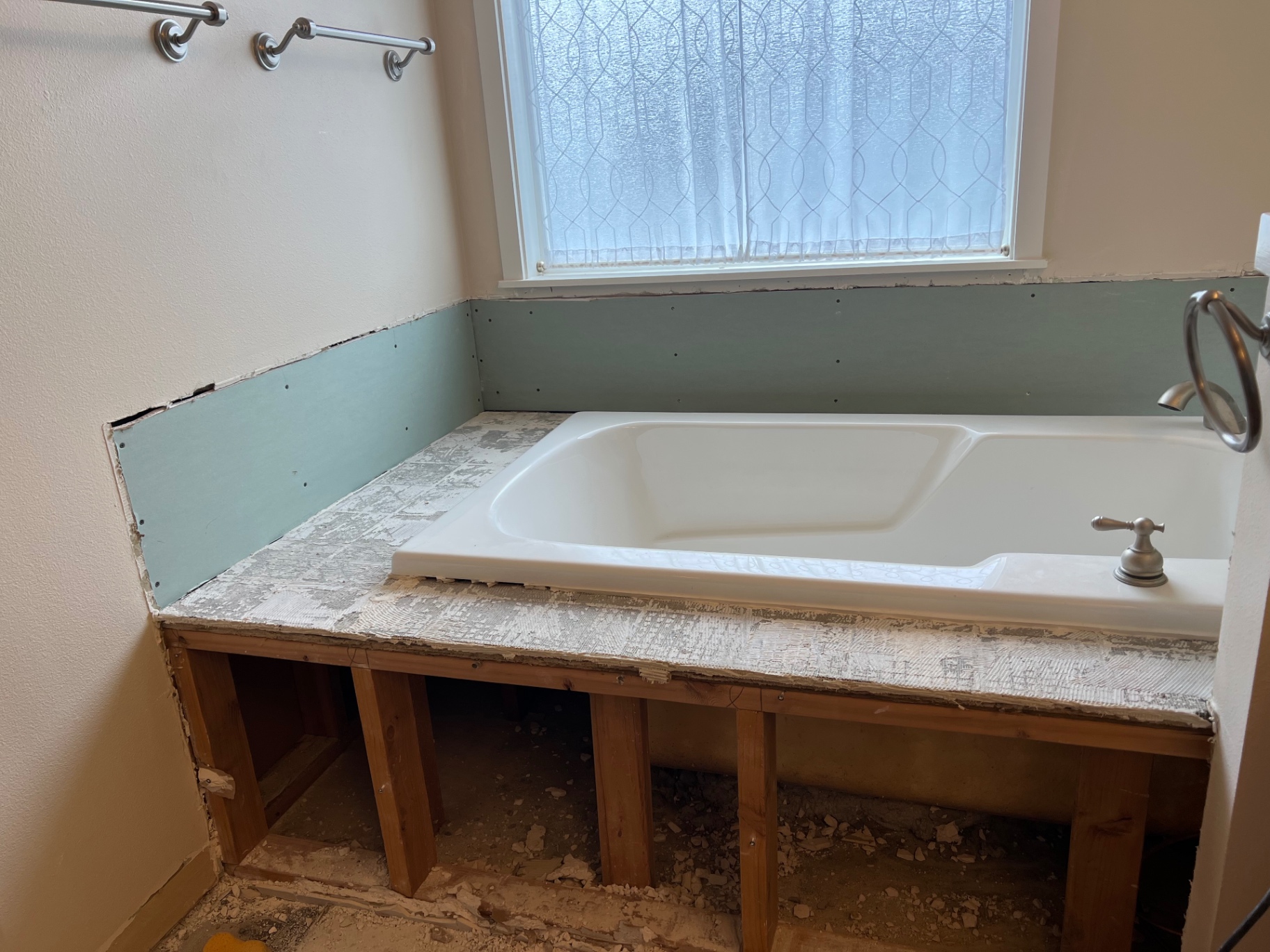
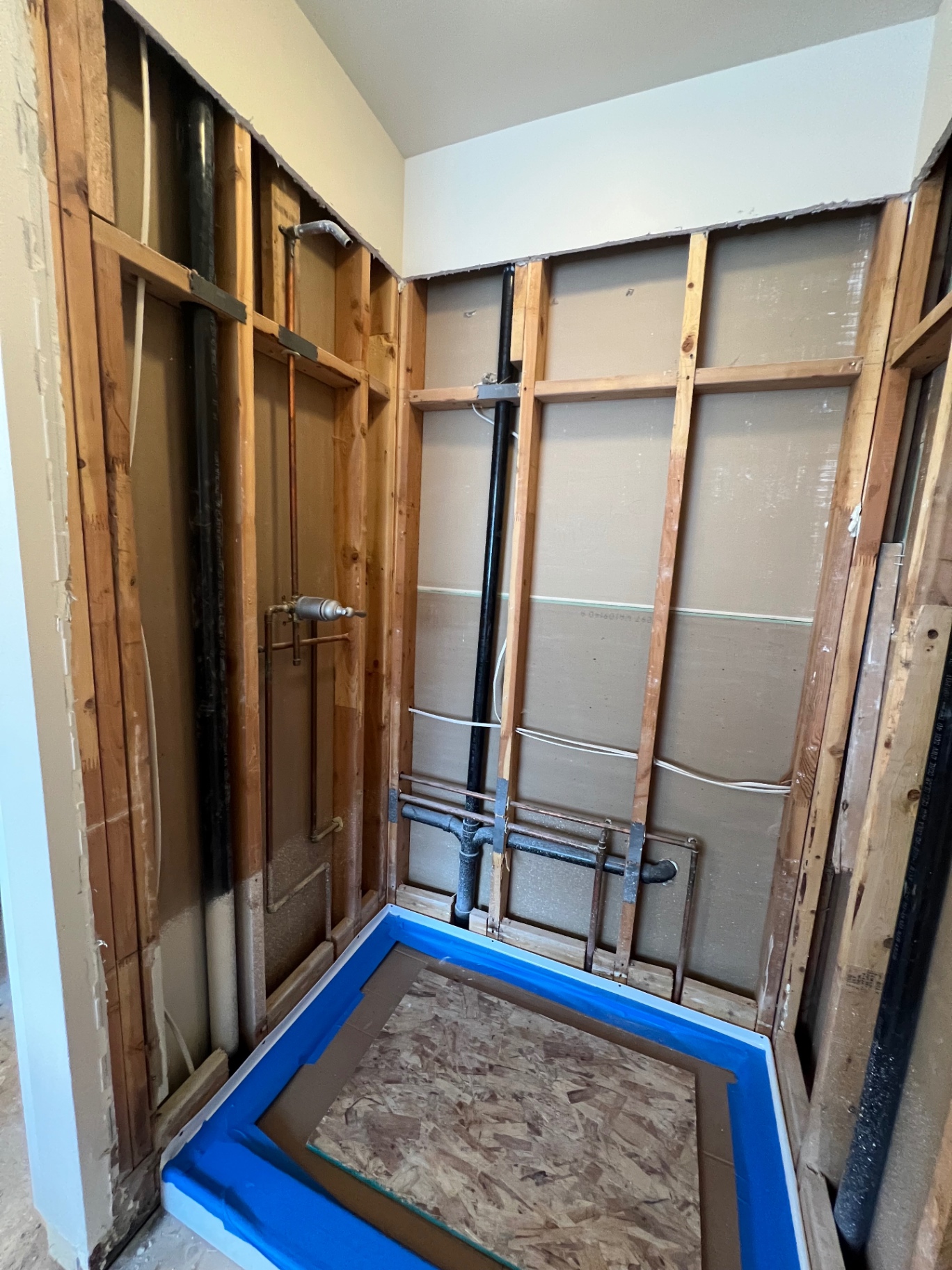
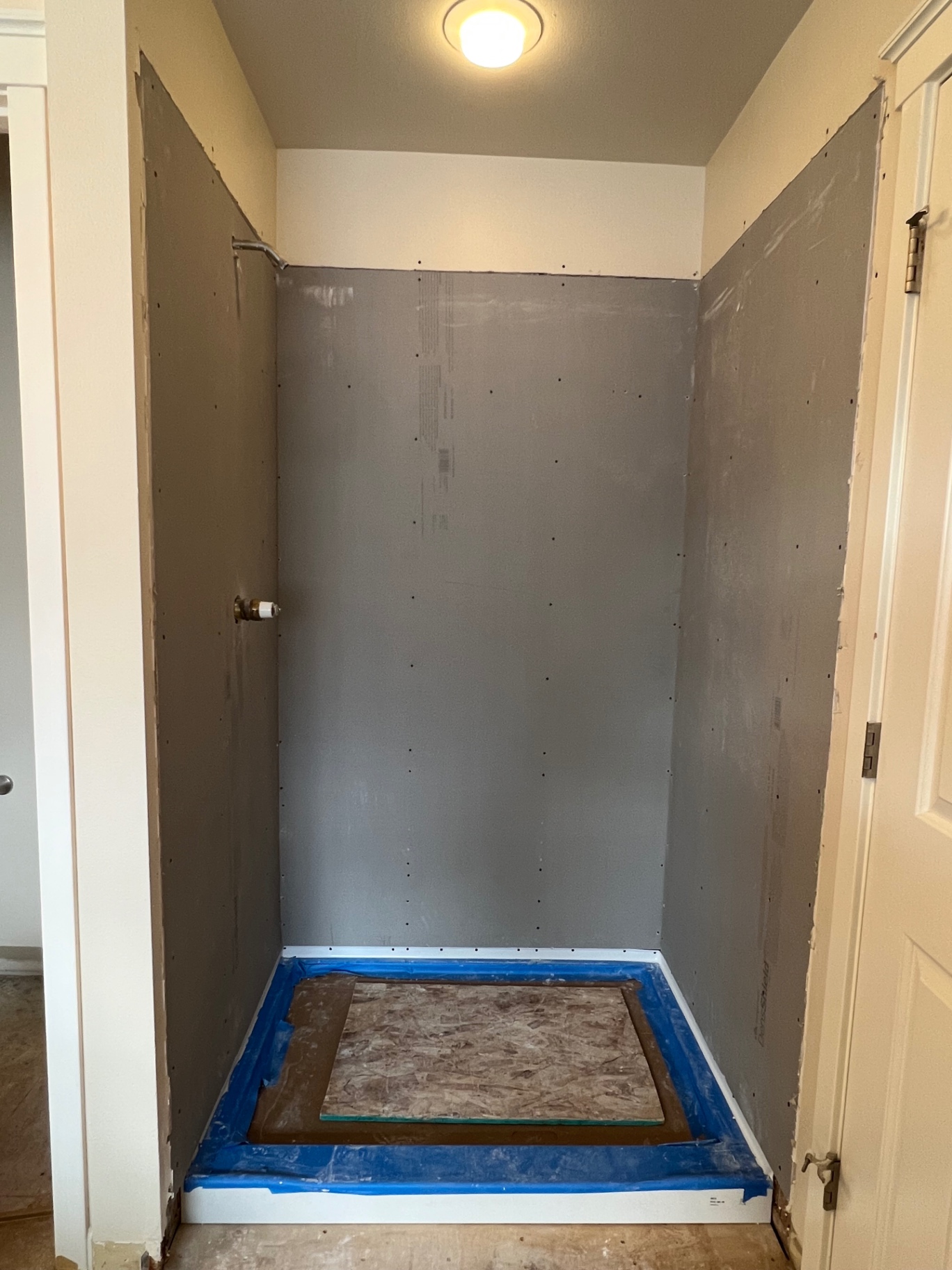
Honest triage. Cleaning is enough when patches are small, on the surface, and the diagnosis above points to condensation you’re now fixing with airflow. It’s a symptom of something bigger when: the same spot returns after proper cleaning; drywall is soft, stained, or bubbling; grout lines or the tub seam host the recurring line (water is behind the tile); the musty smell persists in a clean-looking room; or the bathroom predates modern waterproofing entirely. In those cases the mold is the messenger — the message is that the wet-area assembly has failed, and the fix is opening it up: finding the source, drying the framing, and rebuilding with a continuous waterproofing membrane so water physically cannot reach anything that can rot. That’s not a cleaning product; that’s a remodel — and it’s the difference between fighting mold annually and forgetting it exists. In the Seattle–Tacoma area that rebuild runs $20,000–$50,000 with typically 4–8 weeks of construction; for how the range breaks down across sizes and finish levels, see our bathroom remodel cost guide for Seattle & Tacoma.
How we build bathrooms that don’t grow mold
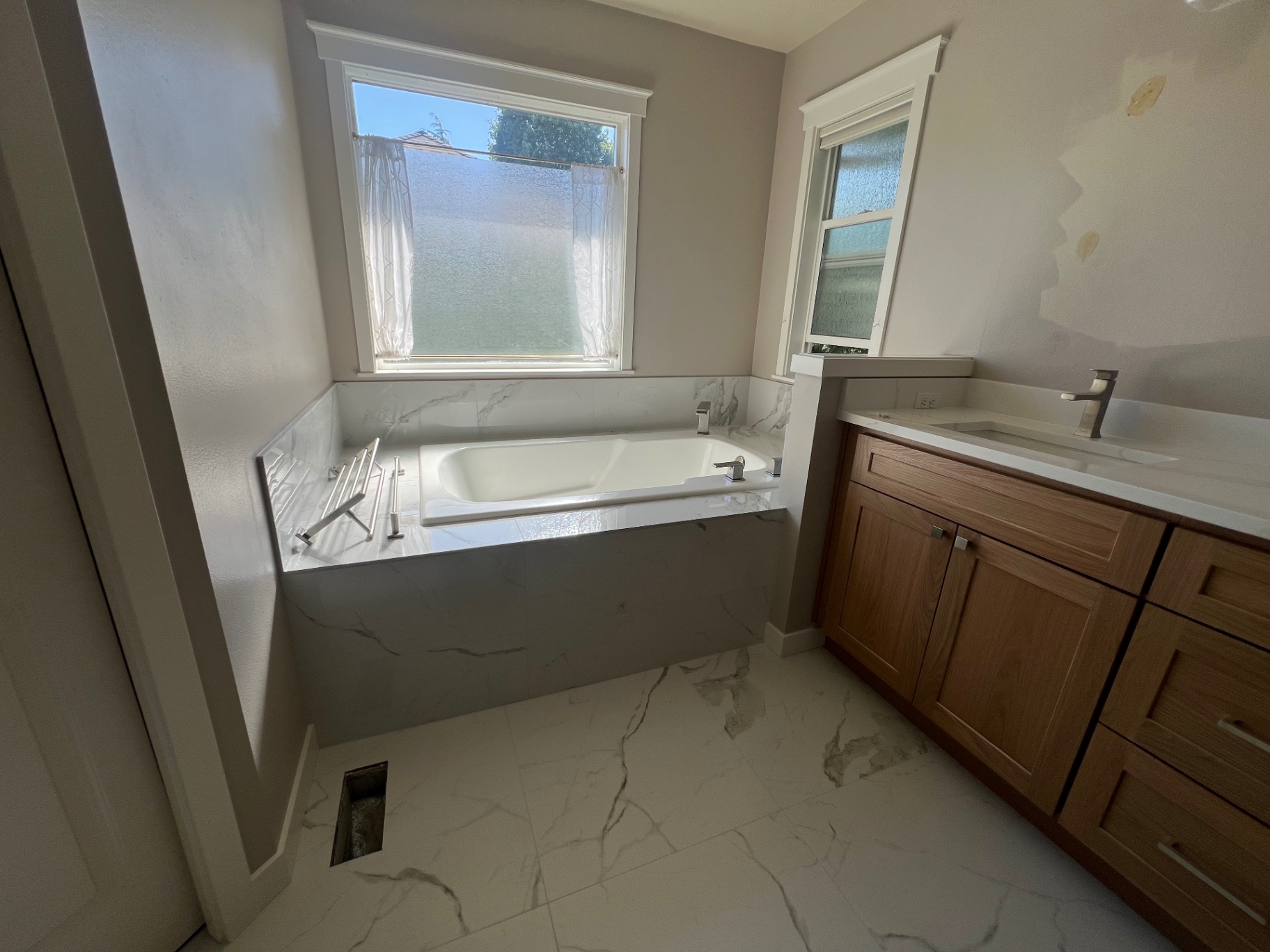
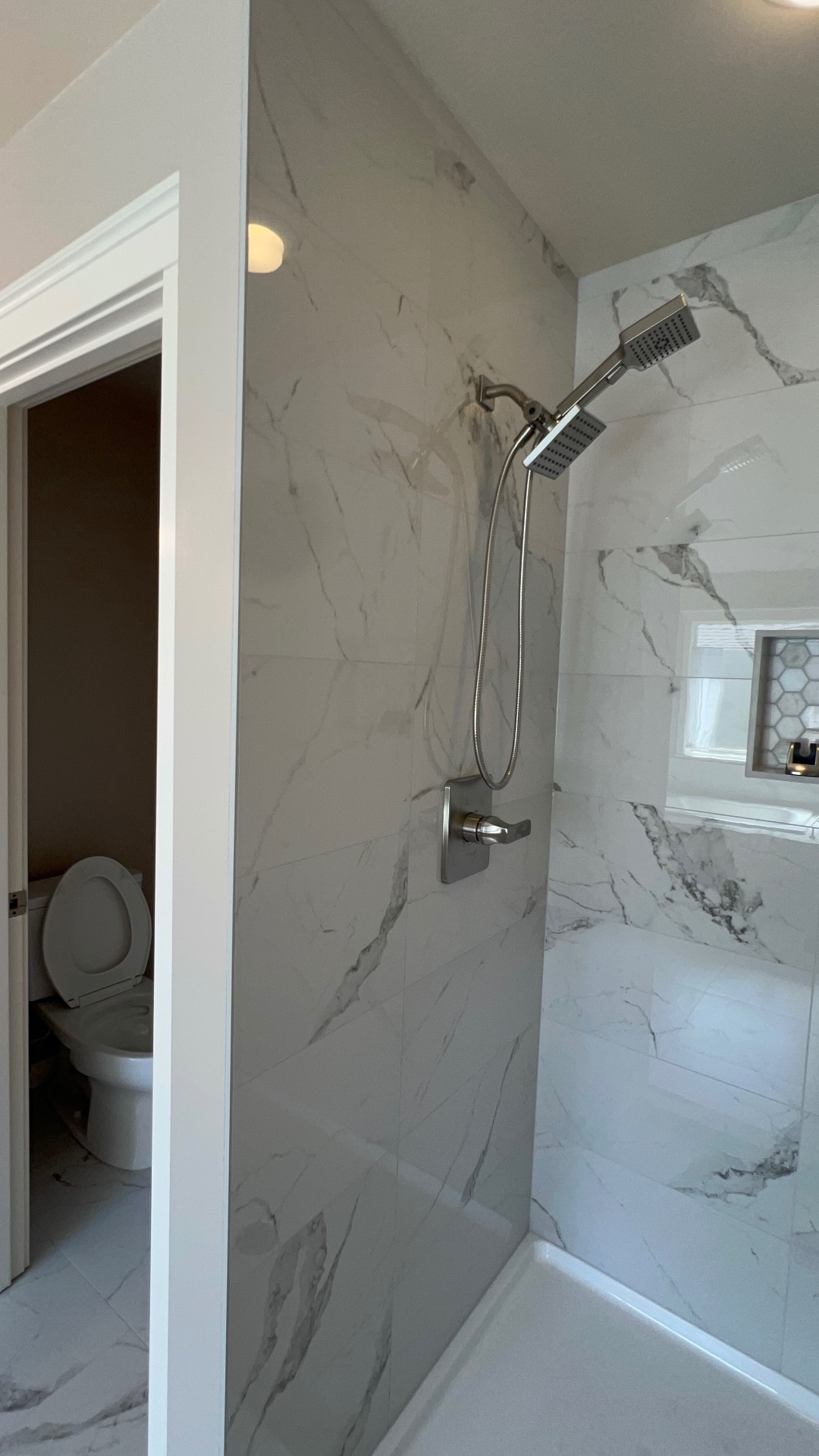
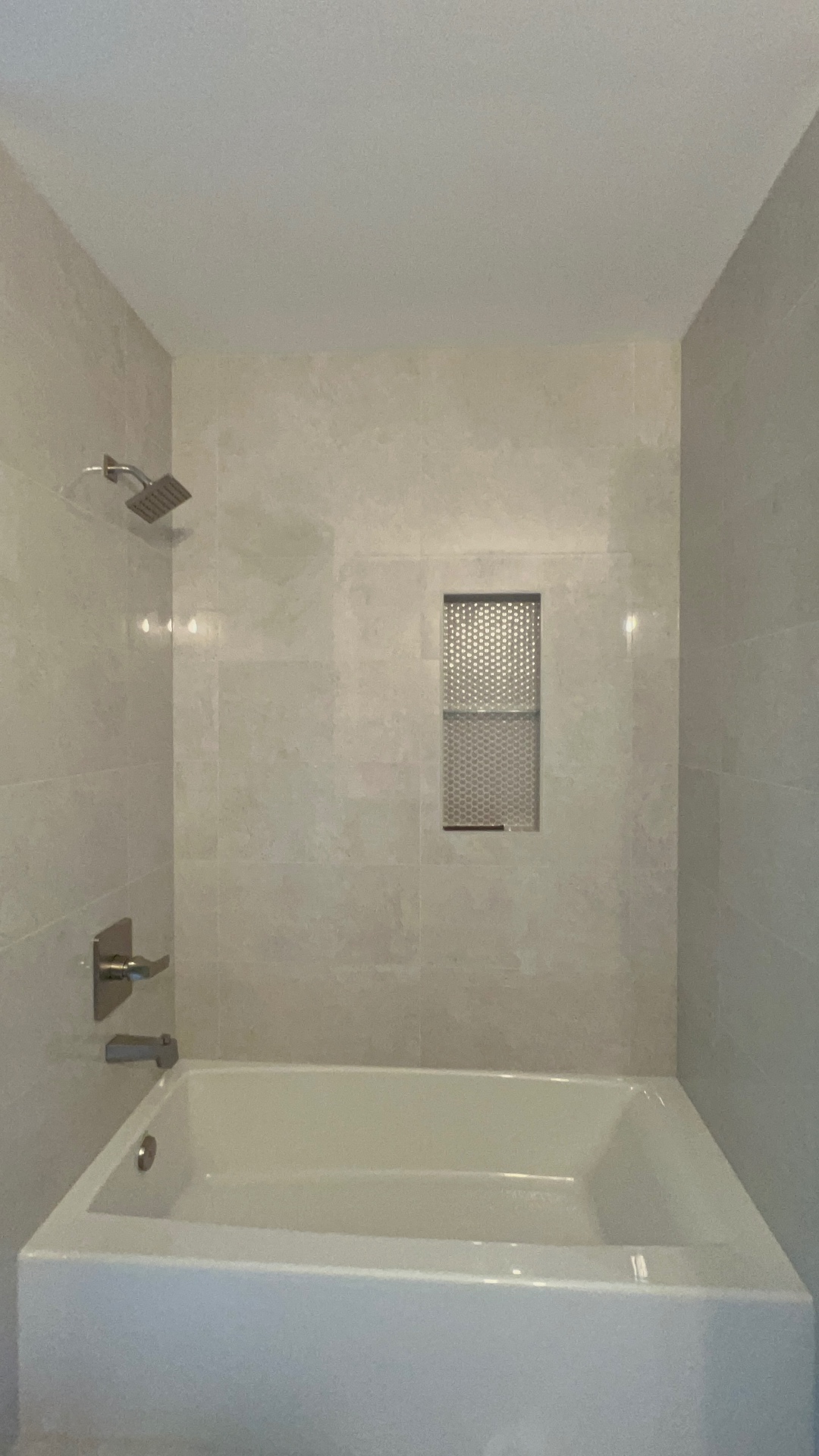
Every full bathroom we rebuild across Seattle, Tacoma, and the rest of the Puget Sound gets the same moisture spine: membrane waterproofing across the wet area (walls, pan, corners — verified before tile), a correctly sized exhaust fan ducted outside with a timer or humidity switch, moisture-appropriate materials in every wet zone, and — the quiet mold-fighter — heated floors ($1,000–$2,500 while the floor is open, roughly $5–$15 a month to run), which dry the room’s largest cold surface between showers instead of letting it sweat. It’s a fixed price with exclusions in writing, typically 4–8 weeks of construction, and the full scope details live on our bathroom remodeling service page.
Quick answers: Bathroom Mold Keeps Coming Back? The Seattle Fix (2026)
- Why does my bathroom mold keep coming back after I clean it?
- Because cleaning removes the stain, not the moisture that feeds it. Recurring mold means the room still has a moisture source — either steam with no working exhaust path, or water getting behind the surfaces. Diagnose which one first; the fixes are completely different.
- Is bathroom mold a big deal or just cosmetic?
- Small surface patches on paint or grout are common and manageable. Mold that returns to the same spot, soft or stained drywall, or a musty smell that survives cleaning points to moisture inside the wall assembly — that's a structural moisture problem wearing a cosmetic costume, and it grows quietly until it's opened up.
- What size exhaust fan does a bathroom need?
- The working rule for typical small baths: 50 CFM minimum, roughly 1 CFM per square foot, ducted outside the house — never into the attic — and run 20–30 minutes after each shower. A timer or humidity-sensing switch makes the habit automatic.
- Can I just paint over bathroom mold with special paint?
- Paint changes the surface, not the moisture. Over a condensation problem you're delaying the return; over a supply problem you're sealing the messenger while the wall keeps getting wet. Fix the moisture first — then paint is fine.
- My bathroom has a window but no fan — is that enough in Seattle?
- For nine months of the year, no — opening a window in February trades steam for cold, so nobody does it. Older Seattle and Tacoma homes were built on the window theory; adding a properly ducted fan is one of the highest-value upgrades those bathrooms can get.
- When does recurring mold mean I need a remodel?
- When the diagnosis points behind the surfaces: the same spot returning after proper cleaning, soft drywall, a persistent line along grout or the tub seam, or a musty smell in a clean room. At that point the wet-area assembly has failed, and rebuilding it with membrane waterproofing is the fix that ends the cycle.
Bathroom remodel cost calculator (condo or house)
Pick your property type and scope for an orientation range inside our published Seattle–Tacoma pricing. It is not a quote — a fixed price comes from an in-home measurement.
Orientation range
$27,500–$42,500
Typical build time: 4–8 weeks.
Free PDF: 2026 bathroom remodel costs in Seattle & Tacoma
A printable PDF with our $20,000–$50,000 Seattle–Tacoma cost ranges, realistic timelines, the questions that make two bids comparable, and a walkthrough checklist. Send it to your inbox and keep it during planning.
Get a fixed price for your Seattle or Tacoma project
Four fields, about 30 seconds. We reply within 2 business hours, Monday–Friday 8am–5pm PT, and we work across King and Pierce counties — Seattle, Bellevue, Issaquah, Renton, Kent, Tacoma and the towns between them. Bathroom remodels here run $20,000–$50,000 over 4–8 weeks and tub-to-shower conversions $8,000–$30,000 over 1–3 weeks; your written estimate prices your actual room, with the exclusions spelled out.