24×48 Tile Backsplash: 2026 Seattle Kitchen Trend
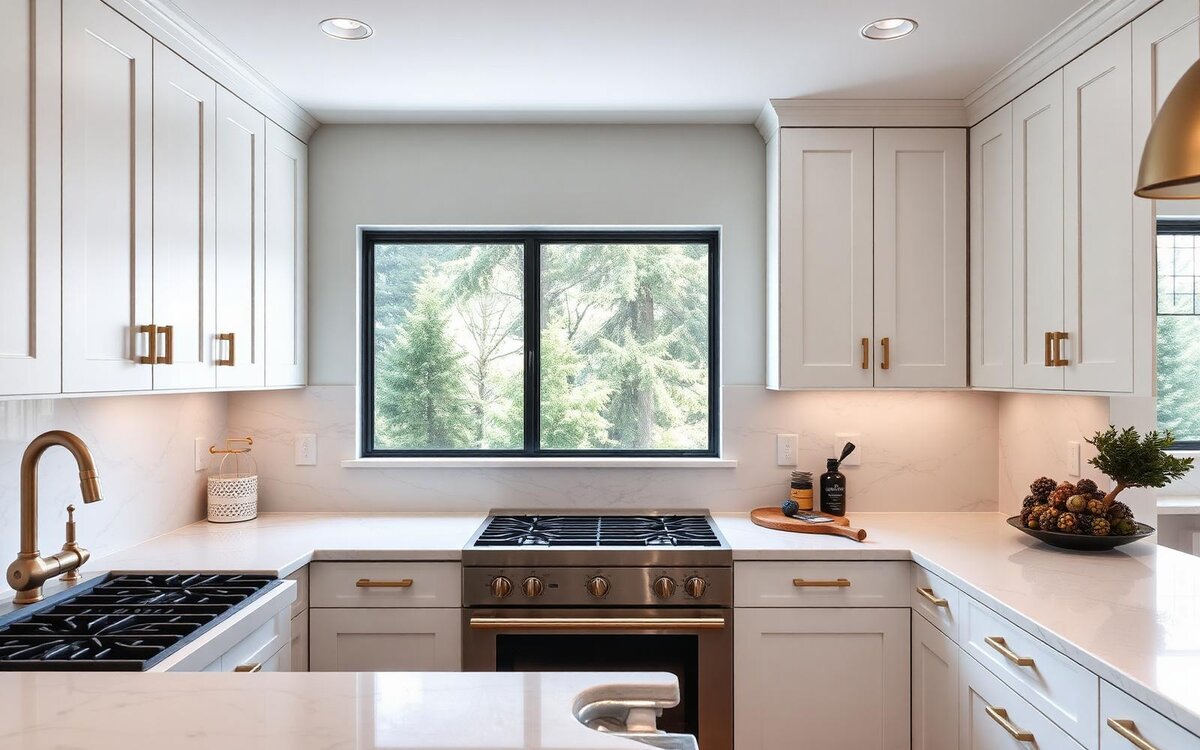
Quick answer: A 24×48 large-format porcelain backsplash gives you the seamless, “one piece of stone” look that defines 2026 kitchens — one or two grout lines across the whole wall instead of a grid of them — typically for about half the cost of a real quartz or stone slab backsplash. Most Seattle–Tacoma kitchens land around $2,000–$5,000 installed depending on wall area and layout. The catch: at this size, installation skill is everything — flat walls, leveling systems, and smart seam planning decide whether it looks like a slab or like big tiles.
Key facts
- One 24×48 panel covers 8 sq ft — a typical backsplash run needs only a handful of pieces, so grout lines nearly disappear.
- Marble-look and stone-look matte porcelain dominates 2026 — the slab aesthetic without natural stone’s sealing and staining upkeep.
- Typical installed cost (Seattle–Tacoma): ~$2,000–$5,000 for a full kitchen backsplash; a comparable quartz slab backsplash usually runs $3,500–$7,000+.
- Porcelain shrugs off heat behind the range and wipes clean — no sealing, ever.
- The 2026 move: run the tile counter-to-ceiling (including above the uppers or behind open shelving) for the full “drenched” look.
- Not a DIY-friendly format: walls must be flat within tight tolerance, and large panels need two installers, leveling clips, and full thinset coverage.
Why this is THE backsplash of 2026
Kitchens have been moving toward calm, uninterrupted surfaces for years — and the backsplash was the last busy zone left. A 24×48 panel replaces a grid of subway joints with an almost monolithic plane: light glides across it, veining reads like real stone, and the kitchen instantly looks more expensive. It’s the same visual language as the slab-quartz backsplashes in high-end showrooms — at roughly half the invoice, with porcelain’s zero-maintenance surface behind the cooktop.
Design moves that make it look custom
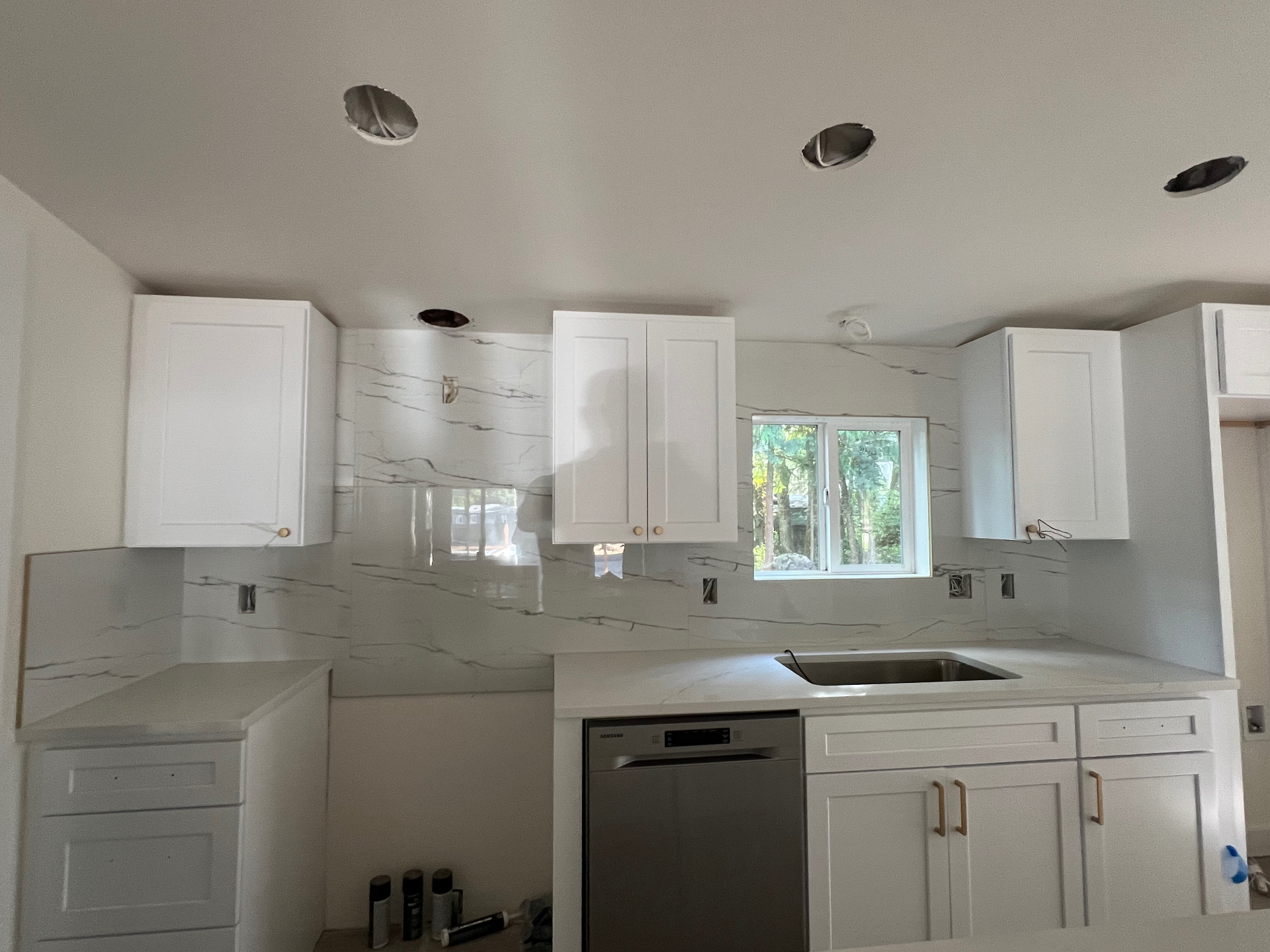
The difference between “big tiles on a wall” and “that looks like a slab” is planning. Seam placement: center the layout on the range or sink so any joint lands symmetrically — never let a cut sliver die into a corner. Vein direction: run marble-look veining horizontally to stretch the kitchen, or bookmatch two panels behind the range for a showpiece. Grout: color-matched and thin (rectified edges allow ~1/16”), so joints vanish. Height: counter-to-ceiling is the 2026 signature — especially behind a hood wall or open shelving. Finish: matte or honed hides smudges and glare better than polished under cabinet lighting.
The install reality: where this format punishes shortcuts
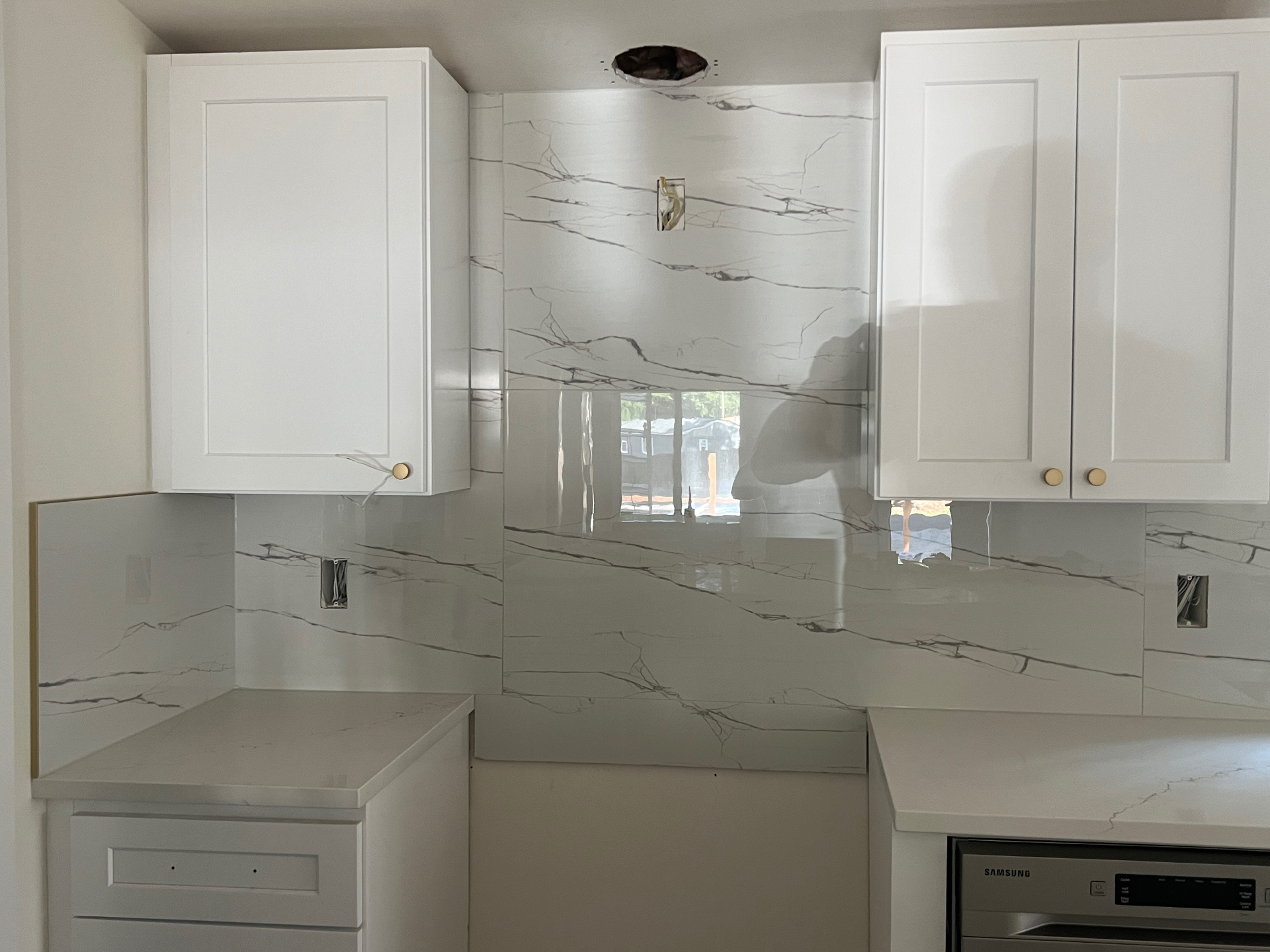
Everything that makes 24×48 beautiful makes it unforgiving. Walls must be genuinely flat — large panels telegraph every hump, so we skim-coat first when needed. Panels this size need full thinset coverage with back-buttering (hollow spots crack later), leveling clip systems to hold faces perfectly flush while curing, and two sets of hands just to place each piece. Cutouts are the silent killer: every outlet hole is a chance to crack a $100+ panel, which is why we plan electrical first — often relocating outlets into horizontal strips under the cabinets or pop-up units, which both protects the panels and keeps the slab look uninterrupted. This is the honest reason to hire it out: the material is affordable; the craft is the product.
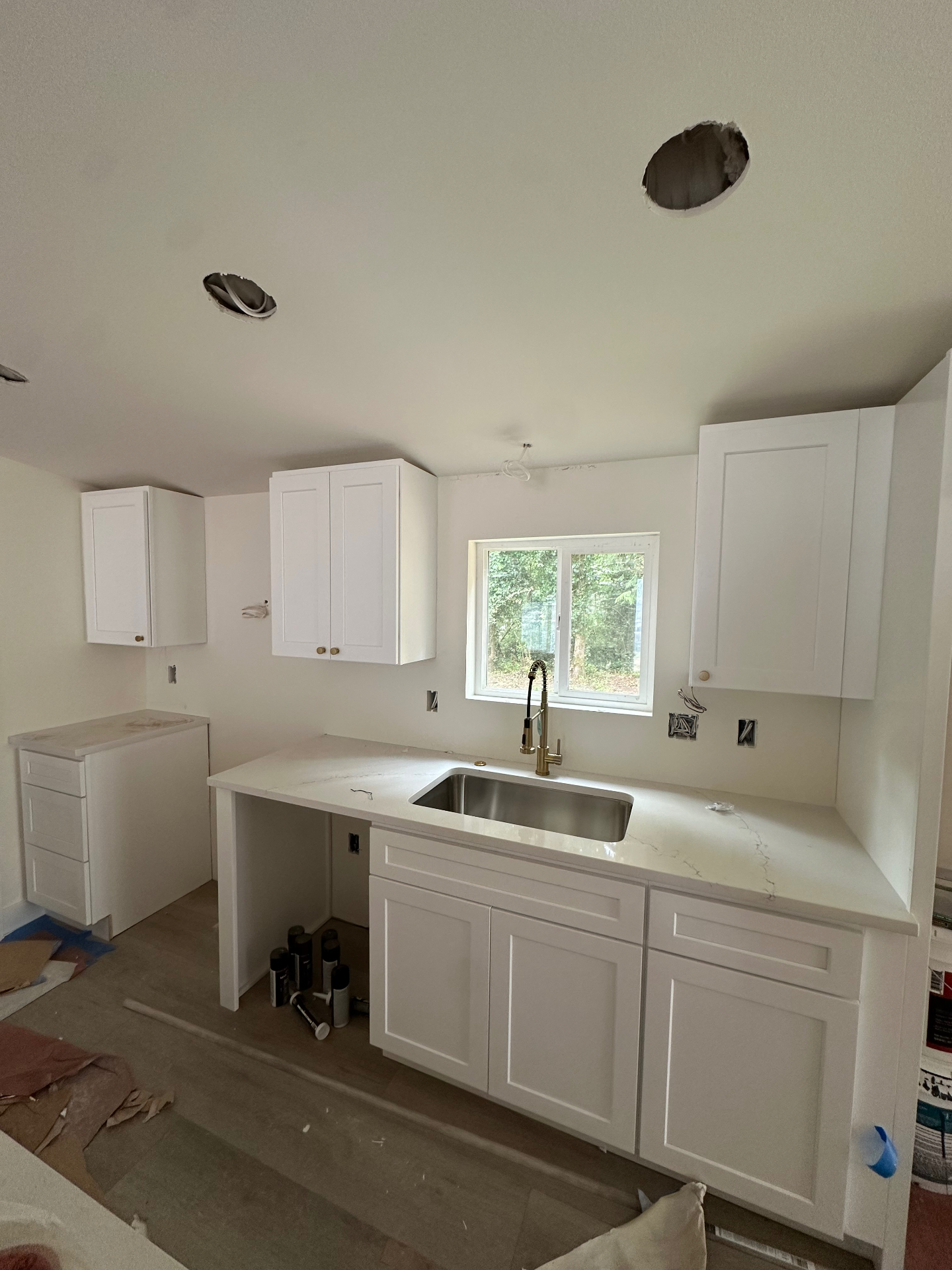
Before & after: same kitchen, 24×48 slab-look transformation
Same wall — before cabinets and backsplash, and after full-height 24×48 porcelain went in. The finished wall reads as one continuous surface behind the range and around the window.
 BeforeAfter
24×48 porcelain vs the alternatives
| Factor | 24×48 porcelain | Classic subway tile | Quartz slab |
|---|---|---|---|
| Installed cost (typical kitchen) | ~$2,000–$5,000 | ~$1,200–$3,000 | ~$3,500–$7,000+ |
| Grout lines | 1–3 total | Dozens | None |
| Look | Slab/stone effect | Timeless, busier | True monolith |
| Maintenance | Wipe clean, no sealing | Grout upkeep | Wipe clean |
| Best for | Modern, transitional, “drenched” walls | Craftsman & classic Seattle homes | Max-budget showpiece |
Is it right for your kitchen?
It shines in modern and transitional kitchens, behind pro-style ranges, and anywhere you want the wall to read as one calm surface. If your home is a classic Seattle Craftsman where period character matters, a handmade-look subway or zellige may suit it better (see our 2026 tile trends guide). For the shower version of this same trend, see our guide to 24×48 in showers. Either way, the sequence is the same: we check wall flatness, plan seams and outlets on paper first, and quote a fixed price — so the slab look arrives without slab-budget surprises. (Planning a bigger refresh? See what a full kitchen remodel costs in Seattle, or browse the 2026 kitchen remodeling trends we’re building most this year.)
Ready to price a 24×48 backsplash for your Seattle kitchen?
NorthWest Home Remodel Pros installs large-format porcelain across King and Pierce counties with leveling systems, full thinset coverage, and pre-planned seams. Text or call +1 (206) 536-8410 for a free on-site estimate, or send us your project details and we will reply the same day.
Quick answers: 24×48 Tile Backsplash: 2026 Seattle Kitchen Trend
These 6 answers cover the questions Seattle, Bellevue, Tacoma and Kent homeowners ask most about this project — cost ranges, permits, and how long the work takes; here, a tile-only scope is typically 1–3 weeks on site.
- How much does a 24×48 tile backsplash cost installed?
- Most Seattle–Tacoma kitchens land around $2,000–$5,000 all-in, depending on wall area, prep, and layout complexity. A comparable quartz slab backsplash typically runs $3,500–$7,000 or more.
- Is large-format tile better than subway tile for a backsplash?
- For a seamless modern look — yes: a handful of panels and one or two grout lines instead of dozens. Subway still wins for classic and Craftsman-style kitchens. It's an aesthetic choice; both perform well.
- Can you install 24×48 tile over existing backsplash tile?
- Usually no at this format — large panels need a flat, sound substrate, so we typically remove the old tile and skim-coat the wall. Flatness matters far more with big panels than small ones.
- Is porcelain safe behind a gas range?
- Yes — porcelain is fired at high temperatures and handles cooktop heat easily. Keep the manufacturer's clearance to open flame, and it will outlast the range.
- What grout should be used with large-format backsplash tile?
- A color-matched, high-quality grout in thin joints (rectified panels allow about 1/16"). In kitchens we favor stain-resistant urethane or epoxy grout — no sealing, no darkening behind the sink.
- Why do outlets matter so much with big panels?
- Every cutout risks cracking a large panel and interrupts the slab look. We plan electrical first — often moving outlets into horizontal under-cabinet strips — which protects the tile and keeps the wall visually uninterrupted.
Get a fixed price for your Seattle or Tacoma project
Four fields, about 30 seconds. We reply within 2 business hours, Monday–Friday 8am–5pm PT, and we work across King and Pierce counties — Seattle, Bellevue, Issaquah, Renton, Kent, Tacoma and the towns between them. Bathroom remodels here run $20,000–$50,000 over 4–8 weeks and tub-to-shower conversions $8,000–$30,000 over 1–3 weeks; your written estimate prices your actual room, with the exclusions spelled out.